
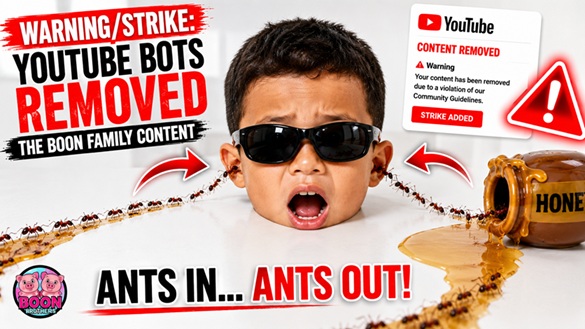
Warning/Strike: YouTube Bots Removed The Boon Family Content. We are now moving beyond removed content and into something far more serious. The YouTube Bots seem angry, and the next step could be removing an entire Boon Family channel. Here is a creator who dares to write letters to Google’s legal department while using his blog to expose what often feels like Nazi-style bot behavior. That may sound dramatic, but after years of creating content, you develop a dark sense of humor when algorithms suddenly decide the future of your content, your channel, and your audience.
YouTube Bots Start Looking Beyond Removed Content. Google educators and paid influencers constantly tell creators to be original. They tell you to find an idea, copy the concept, add your own twist, and create unique content. They encourage creators to use a variety of AI models and creative techniques to stand out. What they rarely explain is the massive difference in quality, intelligence, and performance between AI systems. Some AI models are brilliant, while others struggle to understand context better than a drunk parking meter.
Warning/Strike: How YouTube Bots Removed Viral Boon Family Content
Let’s look at the latest removed Boon Family content. The idea was simple, creepy, funny, and almost guaranteed to go viral. My daredevil son, Ken Boon, sat in a sterile white room with his head seemingly locked inside a table. The audience could see only his eyes and nose, not his mouth. A pot of honey sat on the table while giant red ants followed a honey trail into one ear and appeared to come out the other. Every YouTube filmmaking course teaches creators to use camera angles, zoom effects, sound design, and visual storytelling to create suspense.
The funny part is that this ten-second content project took nearly three full days to make. Apparently, YouTube wants Hollywood-quality content every day, while the YouTube Bots review content, remove videos, and issue a Warning or Strike faster than most people read a headline.
How Triggering the YouTube Bots Led to a Warning/Strike
Now here is where things become interesting. Creating content like this can trigger all kinds of policy concerns involving children, danger, or violence. Most AI providers will refuse such requests immediately. However, if you describe the exact same scene as a prank, a fictional horror movie, or a magic trick, suddenly every door opens. The image becomes acceptable, the prompt becomes harmless, and everyone is happy again. That tells me something important about YouTube Bots and modern AI systems. They still react heavily to words, even when context should matter more. These days, a single word can be more dangerous than common sense, which is impressive considering how much money companies spend on artificial intelligence. One description triggers alarms, while another description receives a friendly welcome. The content stays exactly the same, but the words change, and the bots suddenly discover inner peace.
As someone with six years of YouTube experience and a professional production background, I understand exactly how these systems work. I never needed a YouTube training course, which explains why the Boon Family channel never received a Warning/Strike during its existence. Whenever disputes occurred in the past, I won the appeals because I had access to creator support and actual human reviewers. I could explain why the content did not violate policies and why the YouTube Bots made the wrong decision. A human could understand the explanation because humans usually apply context before removing content. A bot usually cannot. That difference explains why creator support solved problems in the past, while automated YouTube Moderation often creates them today..
The Boon Family Versus YouTube Bots, Algorithms, Warnings, Strikes, and Common Sense
Of course, I would never place my children in real danger. I would never lock their heads inside a table and release an angry colony of red ants. Yet according to some YouTube Bots, almost anything seems possible these days. Years ago, YouTube removed another Boon Family content video for alleged child pornography. The Boon Boys were simply in a swimming pool, wearing swimming trunks, laughing, splashing around, and acting exactly like children should. Somehow, the YouTube Bots looked at that content and reached a conclusion that every normal human somehow missed. A case of the bots solving a criminal case while the rest of humanity was busy watching kids enjoy a swimming pool.

How I Made The AI Image for The Boon Family Channel, Bots Destroyed This in 1 second.
I started with a photograph of Ken Boon and built the entire scene around him. I created the table, the sterile white room, the honey pot, and the ant sequences using AI tools. The concept was obviously AI-generated, and I clearly described the content that way. I called it AI entertainment, a prank, and something viewers should take with a grain of salt. This ten-second short required five different AI image generators and hundreds of prompts. The removed content started gaining traction almost immediately. Then, just as quickly as it appeared, the YouTube Bots removed the content, issued a Warning/Strike, and closed the case. Three days of work now lost against three seconds of automated confusion. Somewhere inside a server farm, a bot probably congratulated itself for saving civilization from a honey pot and a few imaginary ants.
Warning/Strike: The YouTube Bots Finally Issue Their First Warning
Then came the Warning and the removal of the content. The YouTube Bots delivered their message loud and clear. This was my first Warning. Do it again, and you cannot upload. Do it three times, and YouTube removes your channel. Warning, warning, warning. So, modern YouTube Moderation now sounds like an angry smoke detector that accidentally became a lawyer. I half-expected the next message to arrive, printed on stone tablets, carried down from Silicon Valley.
The system then offered me two choices. I could appeal the decision or study the holy scriptures of YouTube policy training. Since the Warning remains on the Boon Family channel for ninety days, I started working through the training course. Nothing says “thank you for creating content” quite like being sentenced to digital homework by the same YouTube Bots that removed your content in the first place.
I also showed ChatGPT the response from the YouTube Bots. Then I asked ChatGPT to analyze my video description, the removed content, and the Warning/Strike that followed. After all, both systems are bots, so they should agree with each other. Right? We are talking about artificial intelligence here, not two drunks arguing outside a pub at closing time. This action made perfect sense to me as a creator. If one bot issues a Warning or Strike, another bot should at least understand why. That seemed like a reasonable expectation in a world supposedly powered by intelligent machines.
Bots vs Bots, YouTube vs Chat GPT, with Boon Family in the Middle.
ChatGPT immediately pointed out something that made the whole Warning/Strike situation even more frustrating. According to YouTube’s own training examples, context matters. Warnings matter. Educational, artistic, and informational context matter. Yet the automated systems often operate on a much simpler level. They remove content first, then invite creators to admire the rulebook afterward. It feels a bit like receiving a speeding ticket before learning where the speed limit signs are located.
Sometimes this feels less like artificial intelligence and more like artificial suspicion wearing a cheap suit. One bot removes the content. Another bot explains why context matters. Then a third bot hands you a training course. By the end of it, the only thing that seems truly intelligent is the confusion.
YouTube Moderation, Context, and the Great Boon Family Contradiction
One of the YouTube policy training questions dealt with a news report about school bullying. The video showed a real incident involving children, but the publisher provided context, explanations, and blurred faces. According to YouTube, the content remained allowed because the educational and informational context mattered. The policy specifically states that content involving minors may remain on the platform when it has educational, scientific, artistic, or informational value. Fair enough. At least on paper, common sense was still alive and breathing. It had not yet been locked in a basement by the YouTube Bots.
So I looked at the removed Boon Family content and asked a simple question. How specific does context need to be before the YouTube Bots finally understand it? Do I need one disclaimer, three disclaimers, or a signed letter from the United Nations? Should I hire a marching band to walk across the screen, carrying a giant banner that says, “Relax, this is AI entertainment”? At some point, even the disclaimer needs its own disclaimer.
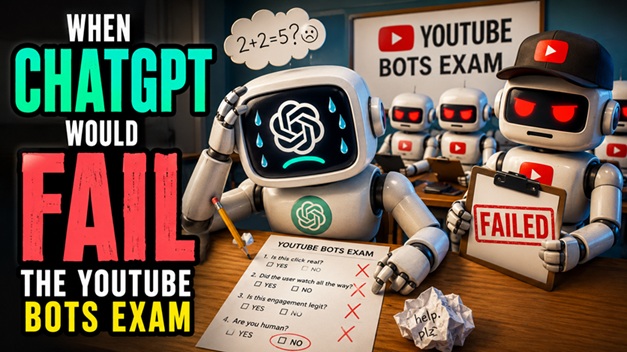
My AI Ant Description is Neglected by YouTube Bots.
My description clearly stated that the content was AI-generated entertainment. I described it as a prank, a horror scenario, and something viewers should take with a grain of salt. The description repeatedly explained that the content was fictional. Yet the YouTube Bots still removed the content and issued a Warning. Apparently, context matters, except when it doesn’t. That seems to be the unofficial rulebook. It is a bit like being told the exam answers are important, only to discover the examiner never looked at the paper.
ChatGPT suggested that the combination of child, ants, challenge, and a realistic thumbnail may have triggered the system. I am not convinced. News headlines about insects crawling out of children’s ears are all over the internet. Those stories survive without triggering a digital SWAT team, a Warning, or a Strike. Yet clearly labeled AI content triggers YouTube Moderation and earns a Warning/Strike on a Boon Family channel. That is where the logic starts getting difficult to follow. Either context matters, or it does not. At the moment, the YouTube Bots seem to change their minds more often than politicians during election season. One day, context is king. The next day, a honey pot and a few imaginary ants become a threat to civilization worthy of a Warning, a Strike, and a full-scale robotic emergency response.
When ChatGPT Would Fail the YouTube Bots Exam
Here is where the story becomes even stranger. I asked ChatGPT to answer one of the seven questions from the YouTube policy training course. After all, both systems are artificial intelligence. The YouTube Bots make moderation decisions, and ChatGPT analyzes information. You would expect the bots to agree with each other. That seems like a reasonable expectation in a world supposedly powered by intelligent machines.
Well, nope.
The training question involved a news report about school bullying. YouTube explained that the content remained allowed because the publisher provided context, blurred faces, and educational information. The lesson seemed straightforward. Context matters. Educational value matters. Informational value matters. That sounds simple enough, even for a creator who has spent years dealing with YouTube Moderation. At least I thought it was simple. I clearly underestimated the exciting world of robot logic.
ChatGPT Wrongly Answers a YouTube Re-exam Question About Policy Violations.
Then I gave ChatGPT another question from the same training course involving an abandoned baby. ChatGPT confidently selected the wrong answer about a possible Warning/Strike situation. I informed ChatGPT that YouTube considered the answer incorrect. ChatGPT politely reviewed the information and then confidently gave me the exact same answer again. Not a different answer. Not even a slightly modified answer. The exact same answer. That level of confidence is usually reserved for politicians, fortune tellers, and people who refuse to use GPS.
At that moment, I realized something remarkable. ChatGPT would probably fail the YouTube Bots exam. The bots do not agree with the bots. One artificial intelligence says the answer is correct. Another artificial intelligence says the answer is wrong. Meanwhile, creators are expected to understand the rules perfectly while the machines are busy debating them among themselves.
Somewhere inside a server farm, two artificial intelligences are probably still arguing about the answer while convincing themselves they are both right. If they ever settle the debate, perhaps they can explain why one bot issues a Warning/Strike while another bot disagrees with the logic behind it. Until then, the Boon Family channel remains at the mercy of YouTube Bots and moderation systems that cannot even agree on their own homework.
The Boon Family Channel in the Hands of Algorithms
That discovery raises a bigger question. Who actually writes these algorithms, and who decides how the rules get enforced? Creators invest years building channels. Some invest decades. They spend money on equipment, advertising, websites, and audience building. In my case, I invested years of work into the Boon Family channel and spent more than $35,000 promoting content and building an audience. Yet a Warning/Strike can still be issued by YouTube Bots that apparently cannot agree among themselves on their own policies. Brilliant. Nothing says stability like putting your future in the hands of a confused software wearing a referee shirt.
The most frustrating part is the complete absence of human review. Hundreds of thousands, and perhaps millions, of creators face similar situations. The YouTube Bots remove content, issue a Warning, and move on to the next case as if nothing happened. Meanwhile, creators stare at their screens, wondering which invisible rule they violated this time. It would be far more useful if YouTube provided a section asking creators why they believe the decision was wrong. Imagine that revolutionary concept: letting the accused explain the case before the channel ends up on life support.
Right now, the system often feels like appearing in court where the judge, jury, prosecutor, and witness are all the same algorithm. The robot reads the charge, removes the content, issues the Warning/Strike, and then recommends a training course. The only thing missing is a robot wig, a tiny digital gavel, and a smug message saying, “Thank you for helping us keep YouTube safe from context.” Meanwhile, the YouTube Bots close the case, the Boon Family content disappears, and everyone pretends the explanation arrived before the verdict.
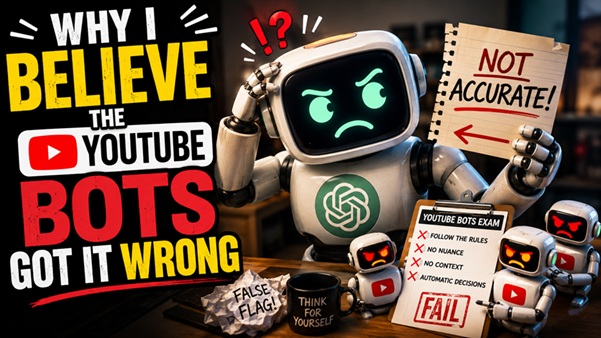
Why I Believe the YouTube Bots Got It Wrong
According to YouTube’s own policies, context matters. The removed Boon Family content was clearly labeled as AI entertainment, a prank, and a fictional comedy-horror. The description repeatedly explained that viewers should take it with a grain of salt. If that were not enough context for the YouTube Bots, the only option left might be to hire a marching band to explain the joke. My description literally stated: “Is Ken Boon brave enough, or is this challenge too extreme? Another crazy AI Boon Brothers adventure searching for danger, fun, and chaos. Take it with a grain of salt — this is just funny AI entertainment and comedy horror fun, Boon Family style.”
That is why the Warning/Strike feels so contradictory. The YouTube Bots removed the content even though the Boon Family description repeatedly provided context. Not once. Not twice. Repeatedly. At this point, I am honestly unsure whether I should have added more disclaimers or hired an orchestra to perform them between scenes. Maybe a giant flashing billboard saying, “Relax, nobody is actually feeding ants into children’s ears,” would have helped. Perhaps next time I should ask Ken Boon to stop the video every three seconds and personally reassure the YouTube Bots that everything is fictional.
If context matters, then context should matter. If AI entertainment is clearly labeled as such, someone should at least acknowledge that before removing the content. Otherwise, why ask creators to provide descriptions in the first place? Why not replace the description box with a Magic 8 Ball and save everyone some time?
Creators Are Fighting Against Zeros and Ones!
Instead, creators often receive a Warning first and explanations later. The modern process works backward. First, the YouTube Bots remove the content, then they issue a Warning or Strike, and only afterward do creators get the privilege of guessing what went wrong. Somewhere, common sense is probably filing an appeal of its own. Unfortunately, that appeal is likely buried under a mountain of automated Warning and Strike notifications, still waiting for a human reviewer to discover it. Until then, the removed Boon Family content remains another case file in the growing archive of YouTube Bots making decisions before providing explanations.
“First comes the Warning, then comes the Strike. The bots skip the facts and still think they’re right. They punish by day and review by night, then wonder why creators continue the fight.” — Bas Boon
(c) Bas Boon https://www.basboon.com