
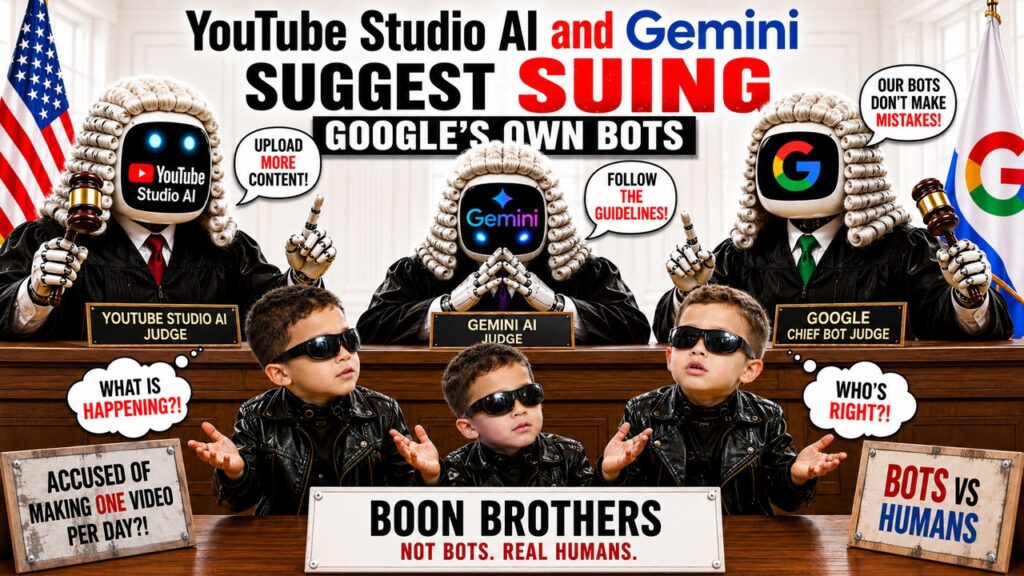
YouTube Studio AI and Gemini Suggest Suing Google’s Own Bots.
My ongoing adventure and feud with the trillion-dollar Google YouTube empire recently produced another comedy masterpiece. A few years ago, I still considered myself a relatively inexperienced YouTube creator. Four years on YouTube felt impressive at the time, especially when $50 to $100 in advertising helped several videos reach 250,000 views. A few productions even sailed beyond 400,000 before Google’s latest miracle arrived.
Then Demand Gen arrived.
That shiny new invention burned through roughly $5,000 of my money in a month. Google Ads support later blamed a “glitch” in the system for the near-absence of views. The explanation felt reassuring in the same way a pilot announcing engine failure feels reassuring. Return on investment resembled a snowmobile dealership in the Sahara Desert. After I stopped advertising, the channel adopted the growth pattern of a concrete block.
Every YouTube expert seemed to have an answer for my rapid decline. Better hooks, stronger thumbnails, more Shorts, deeper analytics, and endless tutorials supposedly held the secret. Since Dutch stubbornness often outranks common sense, I followed the advice. VidIQ memberships followed. AI courses followed. Pika, Runway, Suno, Hailuo, Hedra, Midjourney, and ChatGPT all joined the party. My wallet started whimpering quietly in the corner. Despite the upgrades, reality developed a strange sense of humor. Retention improved. CTR remained healthy. Watch time strengthened. Viewer engagement increased. The channel marched backward anyway. Growth slowed despite reaching 102,000 subscribers, while the Silver Creator Award vanished like a magician’s assistant during a budget cut.
Authenticity reached ridiculous levels. The Boon Brothers appeared throughout the videos. The Boon Family filled the stories. Songs included their names in the lyrics. Music videos featured dinosaurs, dogs, beaches, and watermelon adventures. Calling that mass-produced feels like accusing a family photo album of operating a multinational factory. While YouTube Studio AI, Gemini, and other analytics tools explained how Google’s Own Bots reward quality content, one uncomfortable question refused to leave. Either every expert misunderstood the platform, or Google’s Own Bots forgot to read Google’s own instruction manual.
Gemini, YouTube Studio AI, and a Heart Surgery
Unfortunately, the story became much more serious than declining views and confused Google Bots. Months of stress and fourteen-hour YouTube workdays eventually landed me in the hospital for heart ablation surgery. Recovery kept me away from uploading for more than five months. According to YouTube experts, algorithm gurus, Gemini, and the newly introduced YouTube Studio AI assistant, disappearing that long is the digital equivalent of jumping off a cliff while carrying your channel on your back. The irony could not have been more ridiculous. Every creator expert warned that stopping uploads could kill a channel. At the same time, my obsession with becoming the perfect YouTube creator almost killed the creator instead.
Following a successful surgery, I still blamed myself for the channel’s decline because Google’s Own Bots could not possibly be wrong. Influencers, AI experts, and analytics gurus all suggested the same solution. They advised creators to work harder, upload more frequently, master Shorts, improve thumbnails, study analytics, and learn every new AI tool that appeared. Somewhere out there, another expert was probably recommending twenty-six uploads per day and a direct hotline to the algorithm.
Being stubbornly Dutch, I listened. Back then, neither Gemini nor YouTube Studio AI suggested suing Google’s Own Bots. Looking back, that advice might have been more useful than another hundred tutorials explaining why the problem was probably my fault.
Google’s Own Bots Meet the Boon Brothers
My second life led to a brand-new channel called Boon Brothers.
This time, I followed the rulebook with religious dedication. Every video focused on AI music. Boon Brothers and Music Video appeared in the titles. The Boon Brothers also appeared inside every production, just in case Google’s Own Bots needed glasses, subtitles, thumbnails, and a signed confession from the algorithm. According to the experts, niche focus makes Google’s Bot army very happy. Algorithms apparently become nervous when creators display independent thought. Gemini and YouTube Studio AI would later suggest plenty of explanations, although none sounded better than the obvious one: the system had started arguing with its own rulebook.
Production quality exploded. Bad Dogs Blues, Dino Boogie, and Boondogs Bark and Roll looked fantastic. Music, humor, editing, storytelling, and AI all worked together. Earlier videos on the Boon Family channel had already shown major improvements. Jesus Spoke Rock, Bring It On, and Faces proved how much my skills had evolved since my Hollywood production days.
Looking back, one detail now stands out. Trouble arrived immediately after Jesus spoke to Rock and Faces on my Boon Family Channel. Around the same period, the Demand Gen disaster appeared. Google blamed a glitch. The channel blamed gravity. Strangely, only one of those explanations still sounds believable. At that stage, nobody suggested suing Google’s Own Bots yet. That brilliant comedy twist would arrive later, when YouTube Studio AI and Gemini began sounding more reasonable than the systems they were trying to explain.
YouTube Studio AI Could Not Explain the Missing Audience
By early 2026, I had already produced 10 videos for the new Boon Brothers channel while maintaining the Boon Family channel with Shorts and long-form content. Calling it busy would be like calling a hurricane slightly windy. At the same time, I upgraded to the highest VidIQ membership and began rebuilding almost everything. Following advice from YouTube influencers and algorithm experts, I redesigned thumbnails, rewrote titles, updated descriptions, improved tags, and added chapters. VidIQ rewarded my efforts with a sea of green scores. Titles scored highly. Descriptions scored highly. Thumbnails scored highly. According to the experts, success should have been right around the corner.
Reality had other plans.
Better hooks produced stronger CTR. Improved editing increased retention. Viewer engagement remained healthy. Yet YouTube Studio AI could not explain why Google continued hiding the content. Videos often reached only fifty or one hundred viewers, sometimes in countries I could barely pronounce. The strange part was that previous advertising campaigns costing only $50 or $100 had generated hundreds of thousands of views. Back then, Google could apparently find audiences without much effort. Now the same platform seemed unable to find anybody at all.
Meanwhile, subscriber numbers moved in the wrong direction even as production quality continued rising.
Gemini, Google’s Own Bots, and the Boon Brothers Mystery
The situation became even stranger when the new Boon Brothers channel suffered the same problems as the Boon Family channel. If one channel had landed in algorithm prison, why punish a completely different channel built from scratch? Neither Gemini nor YouTube Studio AI offered an explanation that made much sense. Over the previous years, I had documented every anomaly with screenshots, videos, and analytics. Despite spending tens of thousands on advertising and following every piece of expert advice, Google’s Own Bots treated the channels as if they were invisible. Searching for Boon Brothers on my television often failed to find the channel. That takes talent. Most creators struggle to get discovered. Google’s Bots seemed determined to perfect the art of hiding creators instead.
One detail finally exposed the absurdity. The system flagged content as inauthentic and mass-produced, even after manual reviews restored monetization. Six hours later, another Bot could arrive and repeat the same accusation. Despite being shown to tiny test audiences and often the wrong audience, viewers still watched. Retention remained high. CTR remained strong. Apparently, rock-and-roll dogs, Boon Brothers adventures, and chicken humor were entertaining enough to survive even Google’s best efforts to bury them.
Gemini Starts Suggesting Lawyers for Google’s Bots
During the last month, I started documenting everything on my website. Screenshots, analytics, disappearing impressions, subscriber losses, strange warnings, and contradictory decisions all found their way into detailed blog posts. After publishing the evidence, I decided to feed the articles directly into Gemini and YouTube Studio AI.
The results surprised me.
After reviewing the timeline, neither system spent much time lecturing me about thumbnails, hooks, upload frequency, or the sacred art of posting Shorts every seventeen minutes. Instead, Gemini started discussing legal options. YouTube Studio AI soon joined the conversation. At one point, the systems even helped draft a letter to Google’s legal department in Los Angeles, designed to bypass the enormous wall of Bots protecting customer support from actual customers. That moment felt wonderfully absurd. Google’s Bots appeared to explain why they might be responsible for the problem. Somewhere in California, an engineer probably never expected that use case.
According to the analytics reviewed by Gemini, the numbers looked remarkably strong. CTR remained high. Retention remained high. Viewer engagement remained healthy. Under normal circumstances, content producing those results should receive broader recommendations. Instead, the opposite happened. More clicks often resulted in fewer impressions. Longer watch times frequently produced less distribution. That logic makes perfect sense if your business strategy involves hiding successful content from viewers.
Every influencer, algorithm expert, and tutorial channel teaches the exact opposite. Strong viewer signals should increase recommendations. Yet the Boon Family and Boon Brothers channels seemed trapped inside an alternative version of Google where success triggered invisibility. The real surprise came when Gemini appeared closer to suggesting legal action against Google’s Own Bots than defending them. When the AI starts discussing lawyers instead of analytics, something has probably gone wrong.
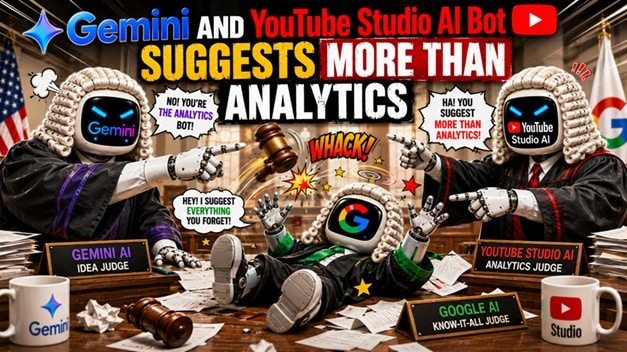
Google’s Own Bots Discover a Mathematical Absurdity
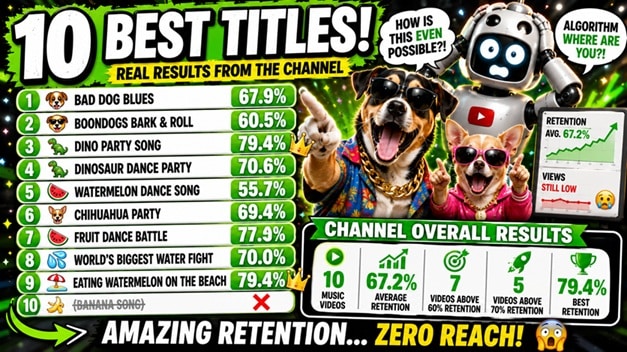
The deeper Gemini and YouTube Studio AI examined the analytics, the stranger the story became. The numbers show viewers loved the content. According to Google’s Own Bots, almost nobody deserved to see it. The Boon Family and Boon Brothers channels repeatedly produced the same bizarre pattern. Viewers clicked, watched, and stayed until the end. A CTR of 24.5% and retention approaching 95% should make any recommendation system celebrate. Google’s Own Bots responded by showing the video to only 49 people and calling it a fair test. Even casinos give customers more opportunities before deciding whether a game is popular.
YouTube Studio AI struggled to explain the contradiction. Under normal conditions, strong CTR and retention should trigger wider distribution. More viewers should follow. More recommendations should appear. Google’s Own Bots seemed determined to test a different theory. Success received less exposure than it should have. The system behaved like a talent scout discovering the next Elvis and immediately locking him in a broom closet.
The pattern repeated across multiple Boon Brothers videos. Retention remained strong. Viewers stayed engaged. Several productions reached retention levels most creators would happily celebrate. Those numbers normally qualify as algorithm gold. Yet the machine often stopped after only a few impressions. Ferrari’s performance met a bicycle’s speed limit. The Boon Brothers delivered the engine. Google’s Own Bots removed three wheels, drained the fuel tank, and then blamed the driver for failing to win the race.
Stuck at 400 Views With a 13.2% CTR and 87% Retention | Boon Boys Eating Watermelon on the Beach 🍉
Gemini Suggests What Google’s Bots Refuse to Admit
The comedy reached another level when YouTube Studio AI reported that some videos performed below average. The software appeared completely unaware that its own distribution system had first restricted the audience. Imagine a teacher locking students outside the classroom and then criticizing them for poor attendance. Gemini continued to suggest that the analytics made little sense given normal recommendation patterns. Strong CTR should increase impressions. Strong retention should increase recommendations. Every YouTube influencer, algorithm expert, and tutorial channel teaches exactly that. Google’s Own Bots seemed to operate under a completely different instruction manual.
As more evidence appeared, Gemini and YouTube Studio AI sounded increasingly uncomfortable with the results. Neither system could explain why strong performance repeatedly produced weak distribution. In fact, both AI systems appeared closer to suggesting legal action than defending the behavior of Google’s Own Bots. By then, the discussion sounded less like analytics and more like the opening argument in a lawsuit. Somewhere inside Google, a Bot deserves an award for solving successful content by making sure almost nobody can find it. That strategy certainly eliminates the risk of a video going viral.
The Numbers That Refuse to Behave
The deeper Gemini and YouTube Studio AI examined the long-term data, the harder it became to explain the results using normal recommendation logic. The distribution engine behaved as if somebody had disconnected the fuel line.
One Boon Brothers dataset showed an average viewing duration of 3 minutes and 26 seconds. For YouTube, that should be premium fuel. Another period delivered a 13.2% CTR across 78 days, a number many creators would happily frame on their office wall. Viewers clicked, watched, and stayed. Google’s Own Bots received all the right signals.
The strange part arrived when distribution entered the conversation.
Over 78 days, YouTube generated only 1,600 impressions. That works out to roughly 20 people per day. A healthy system that receives those engagement signals should steadily expand its recommendations. Instead, the Boon Brothers seemed trapped behind an invisible ceiling. Whether a video performed exceptionally well or simply performed well, the final impression count always landed in roughly the same narrow range. The irony intensified when YouTube Studio AI acknowledged that recommendations still accounted for a significant share of traffic. In other words, the matching system appeared to work. The distribution system simply refused to open the gates. Imagine a supermarket stocking its shelves with popular products and then locking the front entrance.
Gemini continued suggesting that the pattern made little sense under normal operating conditions. Strong content should attract more exposure. Strong audience retention should attract more recommendations. Google’s Own Bots appeared to follow a different playbook. By then, the discussion sounded less like analytics and more like evidence in a lawsuit. The Boon Brothers kept delivering the goods. Google’s Own Bots kept acting like airport security confiscating toothpaste from a dangerous criminal.
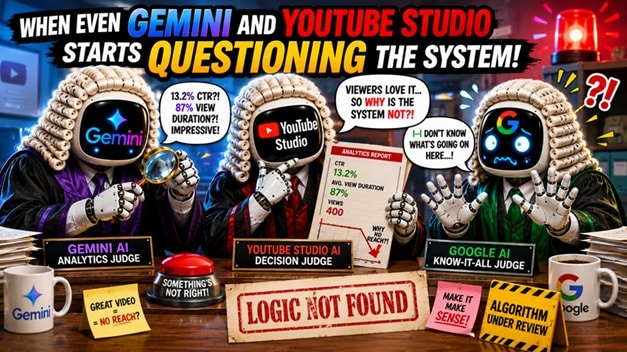
When Gemini Finds a Glitch Parade
Gemini and YouTube Studio AI identified the same problem from a different angle. One Boon Brothers video reached a 6.7% CTR and kept viewers watching for more than two minutes. Other videos scored even stronger. Different numbers produced the same result. The recommendation system kept treating good, better, and excellent performance like three identical parking tickets.
Across 56 days, YouTube produced only 1,200 impressions. That means roughly 21 people per day saw the thumbnail. A lost cat poster gets more neighborhood exposure. The audience responded; the analytics stayed green; and Google’s Own Bots still behaved like nightclub bouncers guarding an empty room.
The situation moved beyond low reach. Strange anomalies started appearing everywhere. Channel searches produced inconsistent results. Videos and the entire Boon Brothers channel became surprisingly difficult to discover. Features that normally help creators grow seemed to develop a sudden allergy to the Boon Brothers. Every time one problem disappeared, another arrived to take its place. The experience felt less like managing a YouTube channel and more like testing software during a power outage.
That list does not sound like normal competition between creators. It sounds like Google’s Own Bots accidentally locked themselves in the server room and spent the afternoon pressing random buttons while calling it innovation.
Gemini kept suggesting that the pattern did not match normal platform behavior. YouTube Studio AI sounded equally puzzled. Strong performance should not result in frozen visibility, broken buttons, or disappearing discovery tools. Yet Google’s Own Bots kept building the same wall while pretending nobody noticed the bricks.
By the end, the analytics no longer looked like a mystery. They looked like evidence. The AI systems saw the same contradictions, the viewers gave the same signals, and the platform kept responding with digital duct tape. When the Bots need Gemini to explain their own mess, the circus has already charged admission.
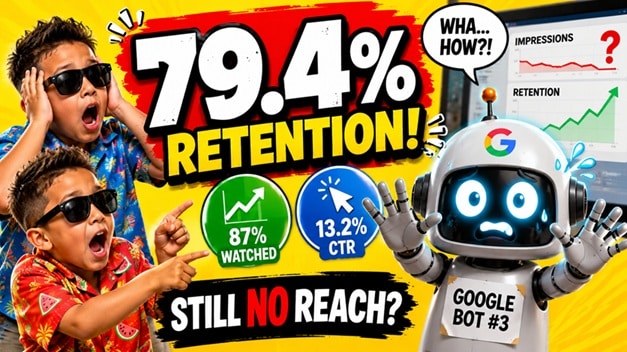
The Circus Reaches Google’s Legal Department
The circus reached a new level when Gemini reached the same conclusion many viewers would reach after studying the evidence. Google’s own AI suggested bypassing Google’s Own Bots and contacting Google’s legal department directly. Let that sink in for a moment. A Google AI advised me how to get around Google’s Bots because the system trapping the Boon Brothers no longer behaved logically.
At that stage, the story had moved far beyond analytics. YouTube Studio AI and Gemini reviewed the data, examined retention, analyzed CTR, and repeatedly reached the same uncomfortable conclusion. The quality signals pointed in one direction. The distribution signals pointed in the opposite direction. One side of the machine recognized success. The other side appeared determined to pretend it never happened. The comedy practically wrote itself. I spent years learning editing, storytelling, AI tools, thumbnails, analytics, and audience retention. After all that effort, the solution suggested by Gemini was not “improve your content.” The solution was “write a letter to Legal in Los Angeles.”
The Moment Legal Sounded More Logical Than Support
The evidence extended far beyond impressions and recommendations. Like buttons disappeared. Appeal buttons stopped working. Shared links refused to function correctly. Blog links mysteriously failed. The videos turned black while the audio continued to play. Channel searches often produced nothing at all. Recommended videos vanished from channel pages. The list grew so long that documenting the malfunctions started to feel like a full-time job. At some point, the Boon Brothers channel looked less like a YouTube channel and more like a software stress test nobody asked for. If Like buttons disappear, appeal buttons stop working, channels become impossible to find, and successful videos receive almost no distribution, arguing with support Bots becomes about as productive as teaching algebra to a goldfish. The few humans still hiding behind the Bot wall become the only people capable of examining the problem.
Time will ultimately decide who is right. A judge may reach a different conclusion. Google may discover another explanation. New evidence may emerge. Yet one fact remains difficult to ignore. Every time I fed the Boon Brothers data into Gemini and YouTube Studio AI, the systems kept arriving at the same uncomfortable conclusion. Instead of defending Google’s Own Bots, they often suggested bypassing them. They recommended escalating the matter to Legal, documenting the evidence, and pursuing formal action.
That is where the story crosses from analytics into comedy. Google’s own AI systems seemed less interested in defending their Bot brothers and more interested in building a case against them. When Gemini and YouTube Studio AI start recommending legal action to bypass Google’s Own Bots, the circus has already packed its bags, sold the tickets, and forgotten who was supposed to run the show.
The Day Mass-Produced Content Became One Video Per Day
To close this madness-filled journey through the trillion-dollar Bot empire, another comedy masterpiece arrived. The Twitter support Bot reviewed the manual reinstatement of monetization that had previously overruled the bot’s decision. After examining the case, the system concluded that the most likely reason for the punishment involved AI-generated mass-produced content.
Say what?
After years of work, a heart operation, months of recovery, endless learning, thousands of hours of editing, and countless sleepless nights, the final verdict was that I had become too productive. For more than five years, I uploaded two, three, and sometimes four videos per week. Nobody complained. Nobody flagged the channel. No warnings appeared. No videos disappeared.
Then I pushed harder.
I spent months working at full throttle. Some days started in the morning and ended somewhere near the following morning. The result was roughly one video per day. According to Google’s Own Bots, which apparently transformed the Boon Brothers into a mass-production factory.
The accusation becomes even funnier when you examine the content itself. The songs contained the names of the Boon Brothers. The videos featured the Boon Family. The stories revolved around my children. Even the AI-generated Shorts almost always included the Boon Brothers, the Boon Boys, or one of the brothers as a central character. The music, lyrics, concepts, scripts, and direction all came from the same creator. Calling that mass-produced feels like accusing a family photo album of operating a multinational factory.
If Google’s Own Bots believe the Boon Brothers are an anonymous content farm, they probably think a wedding video is produced by an international crime syndicate. Calling that mass-produced feels like accusing a family photo album of operating an industrial assembly line. Even Gemini and YouTube Studio AI struggled to explain how one video per day suddenly qualified as mass production. After years of hearing creators told to upload more, work harder, and feed the algorithm, the punishment for following that advice felt like being fined for obeying the speed limit.
When Google’s Own Bots Started Arguing with Each Other
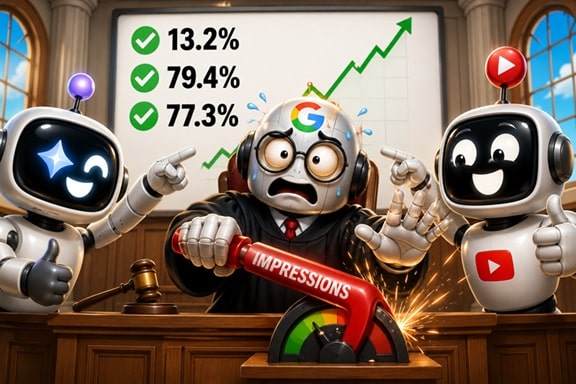
The ultimate joke arrived recently on my dashboard. YouTube Studio AI politely informed me that viewers enjoyed my content and wanted more. The system actually encouraged me to upload more videos. Think about that for a second. One Bot punished me for allegedly producing too much content, while another Bot encouraged me to produce even more.
Somewhere inside Google, two robots appear to be arguing over my channel while neither one remembers what the other said five minutes earlier. Gemini, YouTube Studio AI, and the Twitter Bot all arrived at different explanations. The creators were confused. The viewers were confused. Even the AI looked confused.
The world had officially turned upside down. For years, the message was simple. Create more. Upload more frequently. Improve your skills. Follow the analytics. Give viewers what they want. The moment I actually followed that advice, Google’s Own Bots appeared to change the rules.
The comedy did not stop there. While one system labeled the content as mass-produced, another system kept encouraging me to produce more. At the same time, as buttons disappeared, appeal buttons stopped working, shared links failed, blog links refused to function correctly, videos turned black while the audio continued playing, recommended videos vanished, and channel searches often produced nothing at all. The list of malfunctions grew so long that documenting the glitches took almost as much time as creating the content itself.
When YouTube Studio AI keeps suggesting more uploads while another Bot punishes the Boon Brothers for uploading, the discussion starts sounding less like analytics and more like the opening argument in a lawsuit. This was the moment for Gemini to help me bypass Google’s own bots rather than explain them.
Happy End?
The final joke may be on me. While Google’s “Skynet” interns disguised as Bots spend their days brainwashing humanity and tripping over their own code, I am quietly building something designed to protect people from exactly that. Life has already thrown much bigger challenges at me than a confused army of algorithms. Give it six months. Remember these two letters: BH. The Bots will probably flag it, Gemini will probably recommend it, and the rest will be history.
Bas Boon says, “The Bots keep brainwashing humanity for free; remember BH, because six months from now they’ll be explaining to me.”
(C) Bas Boon https://www.basboon.com